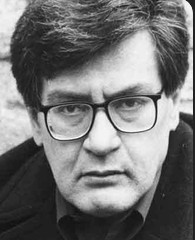
PACHECO, José Emilio
Las termitas
A las termitas dijo su señor:
Derribad esa casa.
Y llevan no sé cuántas generaciones
de perforar, de taladrar sin sosiego.
Hormigas blancas como el Mal inocente,
esclavas ciegas y de incógnito:
dale que dale en nombre del deber,
muy por debajo de la alfombra,
sin exigir aplauso ni recompensa
y cada cual conforme con su trocito.
Millones de termitas se afanarán
hasta que llegue el día en que de repente
el edificio caiga hecho polvo.
Entonces las termitas perecerán
sepultadas en la obra de su vida.
Presencia
¿Qué va a quedar de mí cuando me muera
sino esta llave ilesa de agonía,
estas pocas palabras con que el día,
dejó cenizas de su sombra fiera?
¿Qué va a quedar de mí cuando me hiera
esa daga final? Acaso mía
será la noche fúnebre y vacía
que vuelva a ser de pronto primavera.
No quedará el trabajo, ni la pena
de creer y de amar. El tiempo abierto,
semejante a los mares y al desierto,
ha de borrar de la confusa arena
todo lo que me salva o encadena.
Más si alguien vive yo estaré despierto.
Indeseable
No me deja pasar el guardia.
He traspasado el límite de edad.
Provengo de un país que ya no existe.
Mis papeles no están en orden.
Me falta un sello.
Necesito otra firma.
No hablo el idioma.
No tengo cuenta en el banco.
Reprobé el examen de admisión.
Cancelaron mi puesto en la gran fábrica.
Me desemplearon hoy y para siempre.
Carezco por completo de influencias.
Llevo aquí en este mundo largo tiempo.
Y nuestros amos dicen que ya es hora
de callarme y hundirme en la basura.
The Spider in the Holiday House Motel
The spider's been here.
Quick as a will-o-the-wisp,
tiny as a flea the spider scaled-down,
her final reduction to an almost microbial being.
She climbed into bed,
read something in the open book
and carried off a line in her claws.
Spider in the motel where no one knows anything about anyone,
she, the indifferent one, knows it all
and carries her knowledge: where?
To the negligible part of night
under her dark dominion,
some high castle
or country store of harmless silk
that our poor provisional but necessary
eyes won't see - so the world can exist -
like her web.
Wrapped up in her own arrogance she goes by again.
She wipes out one line more,
ruins the meaning.
The spider is the miniaturisation of terror.
Push her away if you wish but don't kill her.
Now you know what the spider's trying to say.
The Lives of Poets
In poetry there’s no happy ending.
Poets end up
living their madness.
And they’re quartered like cattle
(it happened to Darío).
Or they’re stoned or wind up
flinging themselves to the sea or with cyanide
salts in their mouths.
Or dead from alcoholism, drug addiction, poverty.
Or worse: canonical poets,
bitter inhabitants of a tomb
entitled Complete Works
Dichterliebe
Poetry has just one reality: suffering.
Baudelaire attests to it. Ovid would approve
of such declarations.
And this, on the other hand, guarantees
the endangered survival of an art
read by few and apparently
detested by many
as a disorder of the conscience, a remnant
from times much older than ours now
in which science claims to enjoy
an endless monopoly on magic.
The Octopus
Dark god of the deep,
fern, toadstool, hyacinth,
among stones unseen,
there in the abyss,
where at dawn, against the sun’s fire,
night falls to the sea floor and the octopus sips
a dark ink with the suckers of its tentacles.
What nocturnal beauty its splendor if sailing
in the salty half-light of the mother waters,
to it sweet and crystalline.
Yet on the beach overrun by plastic trash
this fleshy jewel of viscous vertigo
looks like a monster. And they’re
/ clubbing / the defenseless castaway to death.
Someone’s hurled a harpoon and the octopus breathes in death
through the wound, a second suffocation.
No blood flows from its lips: night gushes
and the sea mourns and the earth fades away
so very slowly while the octopus dies.
High Treason
I don’t love my country. Her abstract glory
eludes me.
But (this may sound bad) I would give my life
for ten of her places, for certain people,
ports, pine forests, fortresses,
for a ruined city, gray and monstrous,
for several of her historical figures,
for mountains
(and three or four rivers).
In Defense of Anonymity
Letter to George B. Moore:
I don't know why we write, dear George.
And at times I wonder why we publish
what we've written later.
I mean, we throw
a bottle into a sea filled
with garbage and bottles full of messages.
We'll never know
to whom the seas will deliver it, or where.
What's most likely
is that it will succumb in the storm and the abyss,
in the sand below that is death
…..
I keep thinking
that poetry is something else:
a form of love that exists only in silence,
in a secret place between two people,
almost always between two strangers